Monday, June 12, 2017

Movie Mayhem with God: Wonderwoman, what is she waiting for?

I watched the Wonderwoman film last Saturday. All in all, it was not too bad (my personal favourite superhero film of the year still remains Logan, though I think Wonderwoman is a tad better than GOTG 2, but hey that’s just me), though as my boyfriend and I left the theatres, we could not shake away the nagging thought – between the end of World War I till the start of the Batman versus Superman: Dawn of Justice movie, what the heck was Diana Prince doing? Of course we know that hopefully we will get the answers in year end when we watch the Justice League movie (if we do not, good luck DCEU). However the point of this post is not so much of a direct analysis of the Wonderwoman film or the DCEU per se, but more of my own introspection towards the “what the heck have I been doing” question, and using the Wonderwoman movie to sort of help me find my own answers to the question.

[Spoilers ahead for the Wonderwoman film, please stop if you do not want to spoiler yourself. You have been warned.]

When the Wonderwoman film starts, there is a sort of internal monologue by Diana Prince when she received the preserved photo gift from Bruce Wayne, with his invitation to share her story. There she begins the ruminations and reflections over her past. Through the story, we see how she has evolved, starting out bursting with zeal, idealism but severe naiveté too. Slowly, as she begins to fully comprehend the gravity of things around her and the corrupt nature of people as a whole, her principles and beliefs are tested. Obviously she overcomes that in the end, to persevere and triumph, though it is not without its heft and heartbreaking price. Then film fast forwards back to her, now seemingly serving in some archaeological social enterprise under Wayne Enterprises (of course with Bruce Wayne’s help), posing as some female senior executive to camouflage her. However between that triumph in the film’s finale and this epilogue-ish scene, why the heck is she lying low the way she is? We have confirmed this seeing how discreetly she “moves about the shadows” in the BvS movie, save for that one scene stealing fight.

There were some earlier times in life I had also been bursting with a similar sort of positive vibe, akin to Diana Prince’s headlong march into No Man’s Land in the film. I had this sense of definitive purpose, feeling that some things just needed to be done. It was not about myself, it was about the cause. Of course the sense of accomplishment is nowhere as near the heights of Wonderwoman’s fantastic victory over the Germans in No Man’s Land, but the sense of euphoria in being a contributing part of what needed to be done was unmistakable. The joy with those who I served then, was also alike to the tender scene of Diana Prince having that laidback celebration with those villagers. Only that things did not continue onwards in that positive trajectory, both for Diana Prince and for me. For Diana Prince, none of those villagers she saved then managed to eventually survive. For myself, some things held dear have been shattered to smithereens.

During the monologue introduction, Diana Prince already states clearly that her tale is one that is ultimately about learning, not so much about the victory. Learning about herself, about others, about what she needs to do, and how she is eventually going to do it. I guess that I could say my survival till this day is a victory of sort, but it is just as beside the point as Diana Prince’s one.

I guess for Diana, being the immortal that she is (daughter product of Zeus), she has learnt that since she has time on her hands, she would rather bid her time after the incident of WWI, short-listing fellow-in-arms carefully, such that the eventual team of the Justice League is one to be reckoned with. [Hopefully the movie in December will turn out decent enough like this one.]


Meanwhile, the question I think I need to ask, as a daughter and disciple of the almighty God, is how I should make good use of the time ahead of me, as I await for the next duty assigned to be more and more apparent. Maybe it is what is precisely not shown in the Wonderwoman film, that I need to emulate from Diana Prince. To change from chiong-ing straight ahead into battle, to standing changing to wait for the timing to make the move instead.


Friday, February 24, 2017

La La Land's Achilles Heel: The hypocrisy of Mia

I watched La La Land late last November, I liked it well enough, but wasn’t “blown away”.  Since then, accolades and praise for the film have flooded everywhere, but something nagged at me, until I watched Youtube channel Screen Junkies’ Movie Fight (http://bit.ly/2lmeoWC), when one of the commentators actually voiced it out for me. The character of Mia in La La Land, being the protagonist of the film, driving home to us the message of sticking for your ideals etc. She is a hypocrite.

Now before I get lynched for this piece, I declare that I am not a La La Land naysayer. I think the technical execution of La La Land is excellent. Initially during the announcement of the Oscar nominations list, I had my reservations about Damien Chazelle being tipped as the best candidate to win. However, upon further reflections on what is the definition of a “director”, I changed my mind.
However, when it comes to the character of Mia in La La Land, it would be extremely upsetting if Emma Stone won Best Actress for it. Defenders of La La Land have put forth the argument that Emma Stone does a fantastic job of multitasking (acting, singing and dancing). But when you look into the definition of the word “act”, “acting” or “actor/actress”, you immediately discover that “multitasking” is not an essential or even defining component.  

Good acting brings out the multi-dimensional aspects of a character. The main themes revolving the characters of Mia and Sebastian in La La Land, are that of the pursuit of one’s ideals and dream, and of course their romance with each other. Some reviewers have remarked their dislike over Sebastian’s character, in particular his whininess snobbery about jazz, which put them off. With regard to Sebastian’s character, his portrayal is actually more successful than Mia’s, as we never doubt his passion for authentic jazz, and his love for Mia, which makes Ryan Gosling pull off “good acting” so as to speak.

And in this light, Mia pales horribly to Sebastian. We know that Mia loves acting, or at least we’re told, in the part of the script where she puts up performance to the empty theatre. Later we also a tiny but powerful glimpse of that in the audition scene of “The Fools Who Dream”. But that is it. I couldn’t help have a nagging suspicion that Mia’s pursuit of acting had more to do with an ego fulfilment, than really sheer love for acting. We can see evidence of Mia’s double standards from two notable minor scenes. The first is during her confrontation with Sebastian in the middle of the film, in which she accuses him of “selling out his ideals”. This irony is highly caustic, because we the audience know of the motivations behind this sacrifice and heartache by Sebastian (he was helping fund her failed theatre performance).

Another is the finale of the movie opens with Mia revisiting LA, coming back to the very same eatery where she did her previous waitressing, giving the staff and public a figurative comeuppance. This then flows in with a bit of information the audience gets, that she is now reasonably happily married to a Hollywood director, and finally she and her husband chance upon that authentic jazz bar owned by Sebastian.

Upon secondly viewing of this scene, it makes the viewer immensely forlorn for the character of Sebastian. From the moment we see Sebastian, and through the jazz piano piece solo, we never doubt that despite taking pride and comfort in achieving his dreams, Sebastian has never forgotten about Mia, and she is an integral part of his life. This is sorely lacking for Mia’s part. Without that accidental chancing upon Sebastian’s jazz bar, it seems that Mia has completely dismissed her past with Sebastian to the deep dark recesses of memories, being so caught up with her success now (please see the haughtiness in the eatery scene again). Even at the end of the movie, I am still not very convinced of Mia’s passion for acting, and worse her love for Sebastian.


I suspect that when watching the movie, many people have confused the character of Mia, with the personality of the actress of Emma Stone herself. Emma Stone is a budding, popular, yet humble actress, who has slowly gained prominence is Hollywood over the years. Despite coming into the limelight, both through blockbusters (The Amazing Spiderman series, Crazy Stupid Love), or critically acclaimed performances (The Help, Birdman), she has managed to maintain a rare aura of groundedness, which makes her so endearing. However, this transference of endearment from the actress’ own personality over into the character itself? Good casting yes. That is why Damien Chazelle deserves that directing award, for identifying that trait in the actress Emma Stone, and putting it to good use for the film. Good acting from Emma Stone? I have serious reservations about it. Her performances in The Help and Birdman were better in my opinion, and she does have plenty of potential. Which is why I hope she gets passed for this time round, and wins for a more challenging role in the future.

Monday, February 20, 2017

Movie Mayhem with God: Silence

The experience of watching the film “Silence” was one that is beyond words. Viewing this tale of conflict between faith and doubt, self and others, and how in extreme situations, their entire definitions are perverted, was a very harrowing one. Discomfort is not even the remotely related to the turmoil going through my mind. And the afterthoughts lingered coming to two weeks before I could pen this.

I have never been a good believer, be it whether I was with the Protestant church from 2006 till 2015, or my conversion to Catholicism since 2016. Somehow I was never able to get that kind of ease of assurance of God’s love for myself, and God’s providence for me for the future. While some of my believer friends are gloriously proclaiming of the surety of their hearts for God, I just did not have that confidence. What was I doubting?

I do not doubt the presence of God. Even before I became a believer, my mindset was more skewed towards that of agnostics and theism, than atheism. It is glaringly obvious to me at least. This world despite of its flaws, is already so magnificent. How could randomness give rise to all this?

However, on a more personal level with God, things are complicated. Till this day, I cannot be settled with how God’s providence for everyone works, including myself. In recent times, I have undergone quite a few experiences where God’s providence for me is really… warped is the best word. It is this same tortured warpedness of the situation that torments Father Ferreira and Father Rodrigues in the film. Everything straightforward about their faith has been horribly bent beyond their recognition, and they cannot make sense of the suffering (both of themselves and the others) going on.

In the light of such perturbations, what do we do? (Spoilers ahead) Father Rodrigues prays fervently in desperation for answers, met with long periods of silence, till finally he supposedly seems to receive an answer. Was the voice from God, himself, or worse the devil? At the end of the film, director Martin Scorsese seems to suggest a certain answer through the final shot. However, in the original novel written by Shusaku Endo, there is no such clear mention.

And maybe that is the entire point. The point of faith first falls squarely on the premise of Man’s neediness for God, without which we need not bother about faith at all. In the film, the character of Kichijiro repeatedly does acts of betrayal and apostatising, while only to go beg and pray for confession for absolution of his sins. His character even became comic relief of sorts in this emotionally heavy laden film, emitting chuckles from the audience whenever he started to beg for Father Rodrigues for yet another confession session. While Kochijiro’s manner of conduct is one which we do not hold in much regards, as compared to the courage of the other three Japanese martyrs Ichizo and Mokichi, we must not ignore his character. An earlier article in Christianity Today (http://bit.ly/2kGBQ0R) helps explain it better. This faithlessness indicates a desperate neediness for God, which is a form of faith, as there is absence of doubt.


When I first started out as a believer, I was in a very wretched state, being unable to care for myself in any aspect. Father Erbin from the diocese in Singapore has mentioned quite a few times on the importance of the burning bush moment.  And maybe now that I am in new stage of test of faith, plagued with doubt, I should revisit my former despicable self, and look for what she has to offer me, afterall she was the one who had experienced that burning bush moment. As Father Rodrigues slowly grew to appreciate the friendship and solidarity he had with Kochijiro whom he had earlier detested, it is time to embrace desperation again. Maybe then, will the silence be the sound of peace. 

Sunday, February 19, 2017

Movie Mayhem with God: Manchester by the Sea

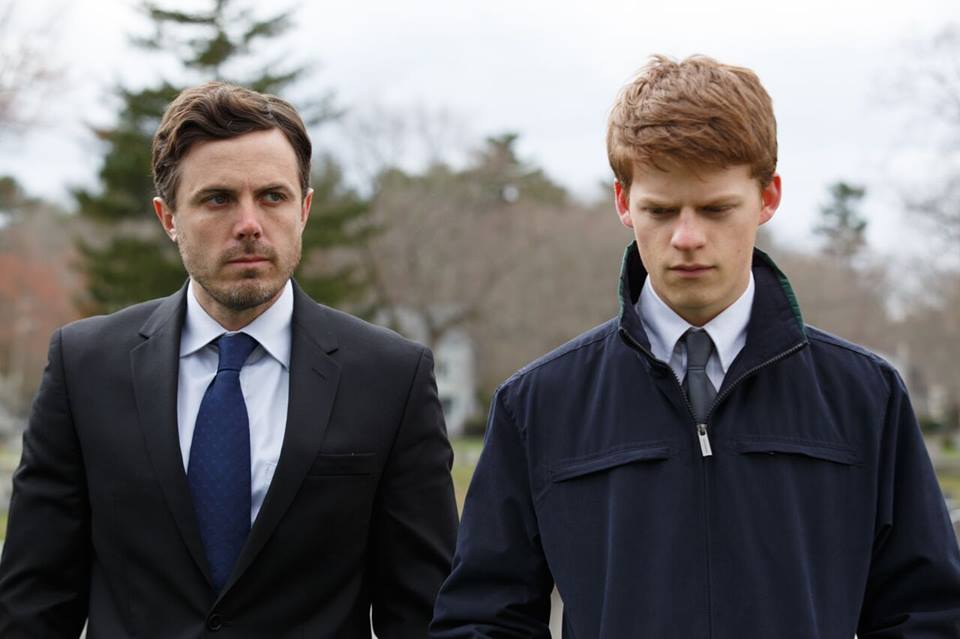
I watched “Manchester by the Sea” last night, and was left with a “and so it goes” kind of nonchalance. Upon some reflection this morning, I was curious about this indifference, considering how there is considerable critical acclaim about “Manchester by the Sea”. And it is only with more self-probing that I realized some uncomfortable truths.

 “Manchester by the Sea” is a “shit happens” reality driven film. I recall a month ago watching “Moonlight” with my boyfriend, and afterwhich the two of us discussing how we felt the movie was realistic, thematic and plot wise perfectly woven, visually well shot, into a masterpiece. After viewing “Manchester by the Sea”, though it may not match up to “Moonlight” in terms of themes, plot and even technical aspects, there is one aspect which it trumps the other hands down. The raw, muted yet gritty realism. (Major spoilers ahead.)

At the end of the film, Lee Chandler (played by Casey Affleck) does not miraculously turn his life around. His life remains more or less the way it is. He is still a janitor in Boston, and eventually does not move back to Manchester. He transfers custodianship of his nephew Patrick over to a common family friend instead. The way the people back there regard him has not improved much (e.g. the scene where a friend’s wife tells her husband “I do not want him around here”, and the scene of yet another bar fight in the final act of the movie). Lee and his ex-wife Randi’s tortured conversation at the finale of the film definitely attests to the fact that both him and her and still aching with baggage of the past, such that their talk disintegrates in the way it does.

And perhaps it was this realism which had been a bit too much for me to bear. When watching I attempted to disengage myself and watch the film like from a clinical perspective of a psychological professional. I had even remarked about how the film is an excellent piece for a study into grieving. This detached callous attitude towards the film only served to mask an uncomfortable indicator for myself.

Just like Lee Chandler, my current life is no miracle story which I can use to praise the glory of God. Some basic elements of my life have been adequately handled, but other pertinent issues lie unresolved, and look set to remain that way. This echoes what the commentator in Screen Junkies’ “Movie Fight” said about “Manchester by the Sea”, that it is a film that dares to tell you shit happens, and it looks set to remain that way for quite a while, without any markedly positive resolution.


The film concludes with Lee Chandler and Patrick playing bouncing of a ball on the way back to Patrick’s place, after attending Patrick’s father’s burial. This seemingly insignificant scene gives both myself and other viewers some solace and respite from the aches from bearing the daily weight of this world. At this point, Lee and Patrick are completely comfortable with each other, despite how the arrangements at the end of the film are anything but ideal. This ease and comfortable echoes the beginning of the film, when during Patrick’s childhood days when everything was the best scenario, Lee and his dad took him out for fun-filled days sailing by the sea. And ultimately this is what matters. Shit happens, and it looks set to stay that way. However, you are still by my side. Here is a big thank you to those who are bouncing the ball with me as I trudge along. Amen.

Friday, February 17, 2017

Movie Mayhem with God: Hidden Figures

I had watched Hidden Figures on 15 February 2017 Wednesday, and while I was not particularly blown away by the film, the inspiring stories of the three female protagonists were nice enough for the viewing experience to end on a positive note. I just did not know there was an essential afterthought relating to the film yet to be discovered. Over the next two days I happened to help a trainer at my work organization facilitate her talks, which involved appreciation and communication between different generational groups. And while doing my work, my thoughts soft of wandered over to a friend’s sister (I’ll address her as G to keep anonymity) who I had “mother-hened” for the past two weeks.

G is in the 25-30 year old range, graduated out from an Australian university since last year. Since then, times have been bad in Singapore economically speaking. G had managed to do a probation for copywriting, though she never made it through to confirmation. She is now still struggling to find another job. I suppose there is a sense of perverted irony, as when I was giving her those support and guidance talks over the phone, I had a “Back-to-the-Future” moment. It was like speaking to myself when I was in 2005, when I blew my probation opportunity at People’s Association big time, ending up in a mental institution for a while. My behavior then was quite reprehensible. It seemed as the entire world was not giving me my due world, everyone (family, friends, the public) owed me everything, they were all bullies who did not recognize my brilliance and intelligence, and these morons should have been prostrating at my feet, cowering at my anger.

When G was telling me last Tuesday on how she found her situation hopeless, I had asked her of what exactly she wanted in her career life. Of course everyone wants a well-paid job, but how do you define “well paying”? What is the bottom line amount which can feed her comfortably? This question was left unanswered. Also, when I threw out many options to delve into, she dismissed the nature of all those options, either stating that the nature of those jobs were restrictive ones which “allowed for no out of it” or were “beneath her”, as she needed to maintain some form of basic dignity, without having her peers look down on her.

I cannot help but muse about differentiating between “pride” and “dignity”. If my past ten years have taught me, it is that pride is a luxury good, which may even have negative effects on your life, whereas dignity is a necessity for livelihood. We need to be discerning about the two, especially when accessing your situation in life, and not mistake one for the other.

I would say there is minimal pride in my current job, and maybe actually it is for the best. It has a basic yet critical amount of dignity, because it pays me comfortable for this full 2017 at least, whilst also being in an environment of direct yet kind colleagues, letting me be able to work and rest healthily. Thus my advice to G is still, to ask her what is important now, because at this very moment the looming presence of continued unemployment in feeding herself day to day still stalks her. If she cannot even bring herself to look at this, what is the relevance of how others look at her. Resolve this immediate issue, and regain that dignity and well-being. Pride can wait.
      
For myself it has been a fully decade, and I hope I have changed for the better. I wish I could tell a miracle turnabout story, but my life is not a bed of roses. In terms of career development and sustainability, the work I do is under grave danger. The project’s funding ends in March 2018, and current signs of performance of the project itself are not in funding renewal’s favour, putting my job security in peril. I also still harbor melancholy whenever I recall two earlier jobs which I loved their nature very much. The complexity of the politicking in those two environments was beyond me, and the members wanted me gone despite reasonable performances, leading to me being forced to resign. I often wonder whether I will ever get another opportunity to serve another cause, which is as fulfilling as those two. I see no such chance over any horizon yet.

When this mixed caldron surfaced again while I was reflecting on how I well or unwell I had assist G, solace came from the character of Dorothy Vaughan in Hidden Figures(played by Octavia Spencer, on the fair right of the poster) . Dorothy treasured mentoring and managing role her department of computers (as in female staff computing figures in an era without calculators), despite being looked upon with disdain and lack of official recognition by the fellow white female colleagues in NASA. Being very alert to what is happening on the horizon of the nature of work in her environment, she seized upon the opportunity to carve out new duties and role for herself and her fellow coloured staff, by securing a coup with the department manning the IBM Main Frame Computers in NASA, to not only become the official supervisor, but also securing all her previous female staff in the computing figures department positions over in the new department.


At the setup for today’s training session, I had a casual talk with the trainer who enquired about my future direction in career development. I honestly confided with her the “feeling of being stranded and lost”, which she kindly acknowledged, stating that times are so unpredictable and volatile with changes. While I am unable to foresee what is happening, because of my past unique experience, I do tend to notice somethings which my peers would readily and easily dismiss. Hopefully these things I notice are doorways to the opportunities in the future that I have been praying for so badly.

Thursday, December 29, 2016

Movie Mayhem with God: Split

The opportunity to watch Split came as an early Christmas present when I won tickets for its surprise screening (contestants did not know what the movie was during entry). Warning of some spoilers here. This blog entry is less of a review and critique, but really more of a personal reflection, since the theme of this movie delves into a very personal area, which is mental health.

As the name of the movie suggests, the main antagonist of the movie is someone who literally disintegrates into many different personalities (dissociative personality disorder), in a bid to deal with the childhood trauma. Of course the movie heavily dramatises and exaggerates the horror of the mental condition. However, it does point towards the very real topic of the vulnerability versus strength of the human psyche.

A month ago, while I was trying to help a friend M deal with her recent bipolar mania outburst, my mother was worried for me, stating she did not want me to be affected by M. Now that 2016 is coming to its close and I am doing so introspective reflecting, I think it is time to take stock of some ideas and emotions.

Firstly, it seems that no matter anything, big or small, good or bad, event or person, it seems that it will definitely have an effect on us. Even no effect, is not really no effect in a strict sense, but a lack of instead. Then if every event, person plays out on us so inescapably, what are we do to with it, since there is no hiding.

This then brings us to the next point. My Spiritual Director Roselie always emphasized to me on differentiating between reacting and responding. I was not too clear about distinguishing between them initially, though now I have a better idea. Reacting indicates a vulnerability in the self, whereas responding is a showcase of one’s strength.

Both protagonist Casey and antagonist Kevin have been subject to childhood abuse. However for Casey, despite being trapped in whatever dire situation she is, steels herself in strength, such that eventually she is able to free herself from physical, psychological and emotional entrapments. For Kevin, his entanglement in the dismal conditions causes him to psychologically and emotionally disintegrate, in his bid to seek vindication for all the ill treatment he had suffered. The key between both is not the brokenness, but whether one falls apart due to the impact of the blows.

There was no slack in the blows dealt to me in 2016. I can no longer look at the Singa Lion simplistically ever again. However, I now enjoy the snide and snarky jokes I crack with my boyfriend about Singa’s trousers. Maybe this verbal stripping gives me just the comfort I need against what had happened. The watermelon and water pipe jokes he cracks while referencing to Lionel Shriver’s “We Need to Talk about Kevin”, are oral punches which he helps me fling out, directed at how some closest to me, who perceived me as a monster while on one hand conducting a welcoming pretense. These jibing sessions of ours are cushioned in the comfort of our private fellowship with one another, away from others to maintain a respect distance not to offend and antagonise anyone.

I pray hard when I examine these broken pieces which lie in front of me. The cracks are very visible, but thankfully I know to take care not to exert too much pressure on them lest they finally snap. Indeed now is not the time yet for these pieces. Meanwhile I turn over to look at the huge fissures of my mental breakdowns in 2006 and 2012, and find to my delight that their traces have paled into patterns which are able to bear the weight of any gentle stroking. Meanwhile I wish M all the best in dealing with her own factures. I hope that she understands too these strokes of beauty, and that there needs not be any shame behind them. May God bless her such that they also slowly fade and dim away.

Friday, December 23, 2016

Jane Eyre, Beauty & the Beast and Passengers: How 2 worked while 1 did not

***First warning for anyone who has yet to watch Passengers and do not want to be spoilered. Second warning for anyone who is unfamiliar with the story of Jane Eyre, and do not want to be spoilered. Read this later!!!

I have watched Passengers during a preview and have proceeded onto read some scathing reviews blasting it. I do not need to repeat it again, and will share two articles which I feel have put the argument across very well, the first article being very negatively impassioned, the second being more analytical.

I recall during the viewing of Passengers, a weird sort of familiarity, and upon reading those numerous negative reviews, some notion brewed about. I hit the eureka moment last night, realizing that I saw some shadows in two other of my favourite stories/films, Jane Eyre and Beauty & the Beast. However, those two have been lauded since time immemorial. Then what made them the paragons they are, while Passengers fell flat. After a bit of musing, I may have some inkling.

1. Perspective
Positive relatability really does work through osmosis. I recall once telling a friend that one of my favourite romances of all time is that between Jane Eyre and Rochester, and my friend asking “Why? He is a temperamental egoistical selfish man.” Rochester is indeed all that, but the dynamic or support for him does not lie with him, but with Jane. When reading the book, we are in awe of Jane’s coming of age since childhood, through her romance with Rochester, the heartache of having to leave him, till the happy resolution. We have befriended Jane along the way, we want her to be happy, and are cheering for her happy ending to as to speak. So it does not actually matter if the guy in question is not exactly a beacon of perfection. What matters is Jane loves him, and we love Jane, and do not wish her upset.

Similarly, the Disney classic Beauty and the Beast is told in a similar plot narrative perspective. We are introduced to Belle, her spunkiness, her curiosity, her courage and receptivity to look beyond appearances, as shown in her hobby of reading. It is actually through her point of view, that we begin to give the Beast a chance too, eventually shipping for their happy ending.

Imagine if these two stories had been retold from the perspectives of Rochester or the Beast instead. The element of support would have dwindled exponentially. And this is the critical mistake that the movie Passengers made.

I did still enjoy the first act of the movie which portrays Jim’s struggles. There was the basic amount of relatability and humour. However, because of the moral conflict made by his selfish act of waking Aurora up, his likability has been great diminished. The remnants of sympathy and relatability we have for him is insufficient for us to condone his actions, lest of all even grant him that happy ending. Usually for viewers to be willing to grant him forgiveness, his character would have to redeem himself somehow with an immensely selfless act and or bear some consequences for his immoral actions. This then leads me to my next point.

2. Consequences
The redemption curve of Jane Eyre and Beauty & the Beast are very steep ones. Rochester got his estate ruined in the fire set off by Bertha Mason. In the process of still trying to rescue Bertha Mason, he lost sight in both eyes. While trying to protect Belle, the Beast was captured and fatally injured by Gaston, dying as the rose wilted away, till in the nick of time, Belle acknowledged her love for him and reversed things.

Let us examine closely the dynamics of selflessness between all three stories. Rochester could jolly well have not bothered with saving Bertha Mason. In fact, it would be good riddance to have her finally dead. Nevertheless, the goodness in him made him do what he did. The selflessness of the Beast is so evident I need not explain it at all.

Meanwhile what about Jim in Passengers? Sure he does have that heroic deed in the final act, with the opening of the combustion engine valve door. If he decided not to take action, he and Aurora would definitely have still died due to eventual engine implosion, together with all 5000 other passengers onboard. The heroism element is severely reduced, and the act is not as selfless as Rochester or the Beast’s actions. This paltry atonement by Jim definitely does not win him as many fans. What is worse is the consequences count.

Before Belle came along, the Beast was trapped in an animal body for goodness knows how long, with his servants all transformed into cutesy cutlery and furniture, while being shunned by the outside world. And even his rescue by Belle was hairline tight and had the audience on the edge of our seats.

Rochester basically had a huge proportion of his estate value wiped out, such that when Jane returns later, her inheritance from her uncle actually surpasses that of his. There is also the issue of his blindness, though the author did eventually cut him some slack, by letting him regain sight in one eye in time to see the birth of his child with Jane.

For Passengers, Aurora managed to get Jim back to the cabin. Though clinically pronounced dead for a while, Jim is revived by Aurora and is largely unscathed. And finally, he basically departs into a “happily ever after” with her for the next 89 years on board the spaceship. Yes, I can already hear the “what the heck” coming out from myself. No wonder so many harsh critics have derided the film for being a fairy tale for males.

Conclusion

Well, there is a bit of bias. I still like Passengers quite a bit and think the casting choices of Chris Pratt versus Jennifer Lawrence is great. It is a pity that they got the structure of the film skewered in the wrong angle. If they had started the narrative structure from Aurora’s point of view, things could have been very different. I read so many reviews that bemoan the lack of character development for Aurora. I agree, and despite the minimal character development for Aurora, I already find myself liking her a lot (Jennifer Lawrence’s pleasant depiction adds value a lot). With more backstory on her (there were already hints of Aurora’s spunkiness in the scenes of Jim reading up on Aurora’s profile while she was still in hibernation), we would have a better understanding of why she made her eventual choice to forgive Jim in the way she did. Maybe then, we would not insist that she made her choice out of a defeated resignation to fate. Afterall, Jim did make it very clear in the ending that he had finally figured out a way to put her back in hibernation, and was letting her decide. Aurora willing relinquished her choice and choose to be with him. It is a pity we do not have a better idea of her feelings towards Jim, such that we’re able to fully forgive him too.